
How Spleen Qi Dysfunction is not about the spleen alone
in TCM - its a functional system

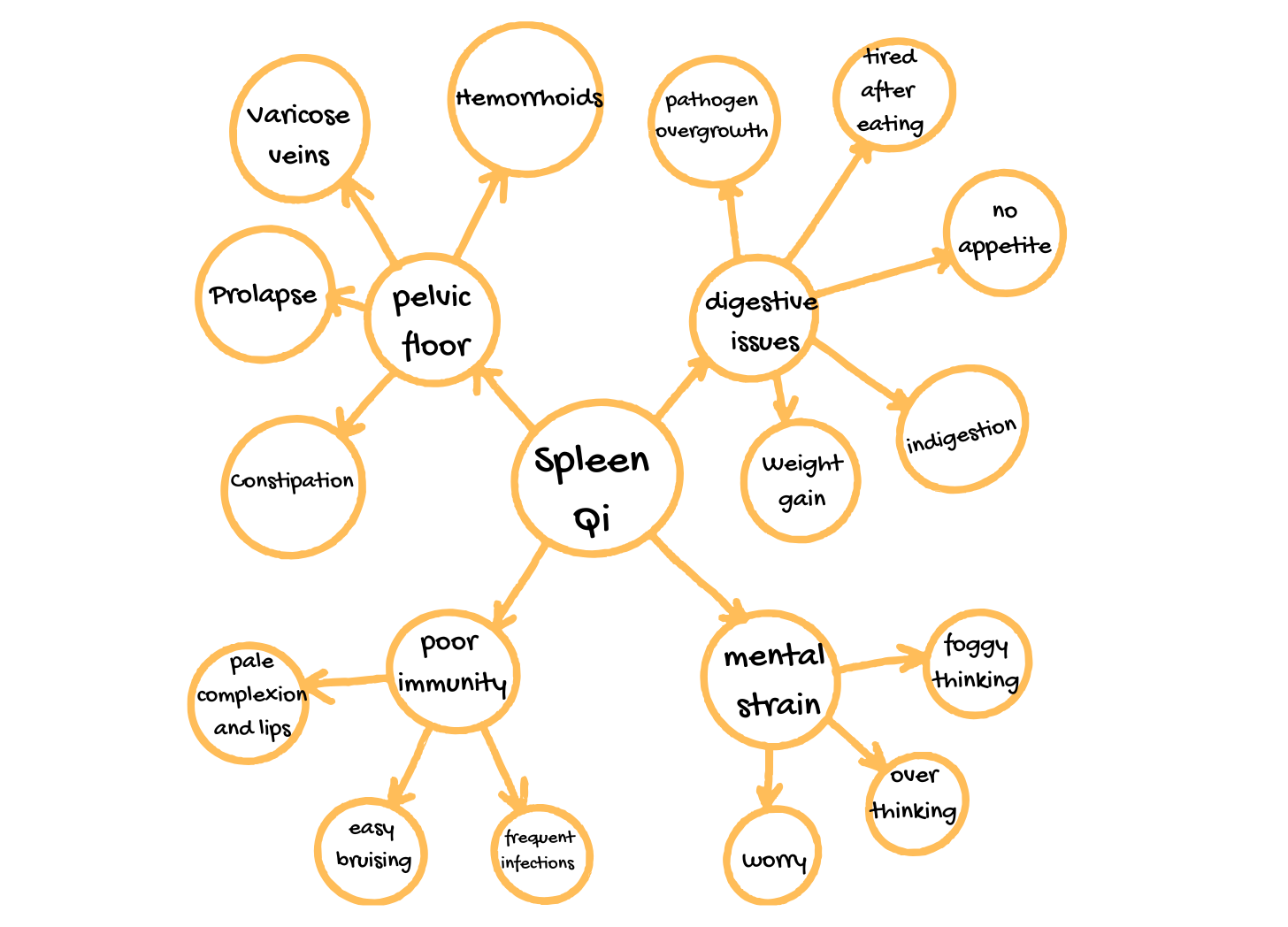
Understanding The Spleen Framework
According to Traditional Chinese Medicine 5 Element Framework all internal organs each have a unique range of interconnected relationships with each other and the external environment. This framework helps us understand the delicate balance among organ systems of The Heart, Lung, Liver, Spleen and Kidney. Each system has its own internal multidimensional links.
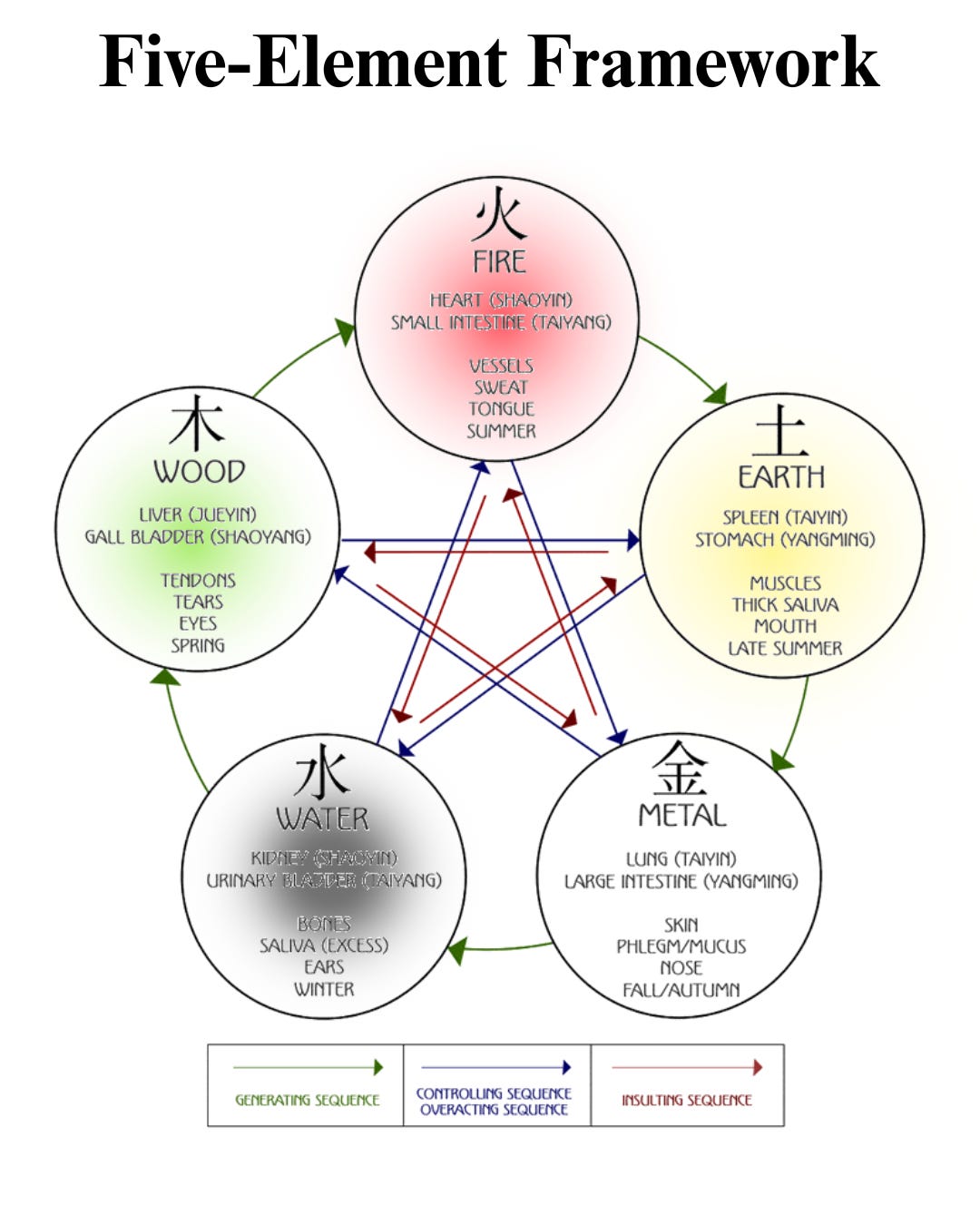
To understand their harmonious physiological, and psychological relationship, TCM has assigned each organ with aspects of mind, spirit, and emotions to understand their scope and relationship with each other better. To understand body’s internal Terrain, it is important to understand the relationship these organs have with each other.
Before proceeding, it’s essential to acknowledge the concept of bio-individuality, which recognizes that each person has a unique set of symptoms and underlying root causes.
This post is for educational purposes only. Today we will only touch TCM dietetics for spleen qi dysfunction. Consult a licensed TCM practitioner for bio-dividual consults.
Western VS Chinese Spleen
SPLEEN IN WESTERN/DIETETICS/FUNCTIONAL MEDICINE
filtering the blood
storing Red blood cells
immune function
SPLEEN IN EASTERN MEDICINE
Spleen governs transformation and transportation food essences and Qi
Spleen controls Blood
Spleen controls the muscles and the four limbs
Spleen opens into the mouth, manifests in the lips, and controls saliva
Spleen houses the Intellect (Yi)
Spleen relationships - houses dampness
Spleen transforms fluids for the Stomach
IN TRADITIONAL CHINESE MEDICINE
Spleen is the central organ in the digestive process. Spleen together with stomach-have a central place in physiology and pathology and the regulation of stomach and spleen plays a central role in a treatment principle.
It makes sense... Doesn’t it?
Whatever you put into your mouth goes through your stomach first and spleen oversees your digestive processes-from extracting food essence to delivering it to each cell of your body. Stomach is your first line of defense and Spleen is like a governor overseeing and making decisions.
To them it’s digestive enzymes, HCL in TCM its digestive fire, spleen qi. All connected organs fall into this pattern. What happens when your digestion processes aren’t functioning properly? Things get suck...
First, it’ll affect your stomach fire (stomach acid & digestive enzymes) and second, spleen will not be able to move semi-transformed food (food essence) disrupting stomach-spleen dynamic relationship.
In 5 element theory, the earth element (spleen and stomach) creates dampness and the metal element (lungs, intestines) stores dampness.
Think about it... For example, using this theory Candida and SIBO stores in lungs SIBO breath test used to detect it? And if we link it to Dampness? It goes back to the earth element? It’s speculation, but it’s interesting.
Some other ways Dampness manifests
1. Dampness stored in lungs - phlegm while coughing
2. Dampness storied in large intestines - loose and sticky stools, diarrhea with undigested food bits, mucus in stools.
But we will discuss Dampness in a separate post.
Millennia ago, TCM said that the stomach is responsible for “propelling” food downward to the colon for elimination. Which now we know as “Peristalsis”.
In old times when there was limited means to explore and explain” metabolism”... Scientifically... Chinese medicine attributed metabolic functions of your organs (stomach-lungs-liver-pancreas) and your food to SPLEEN.
Millennia later, science proved that spleen has initial embryonic role in blood formation... In Chinese medicine language controls blood, transforms fluids for stomach, transformation and transportation or food essence and Qi.
Spleen Qi dysfunction also manifest in stomach (because spleen has controls from stomach to colon) indigestion, gas, bloat, diarrhea etc all of these could indicate → “peristalsis” is being effected.
Spleen being the human body’s second largest lymphoid organ, rich in lymphatic tissues MAKES IT susceptible to Stagnation and ultimately dampness.... The lymphatic system is responsible for propelled lymph that collects excess FLUIDS from body tissues and returns it to the bloodstream, maintaining fluid balance and supporting the circulatory system :)
According to traditional Chinese medicine, the Spleen is the foundation of acquired diseases and the source of Qi and Blood. One of the main physiological functions of the Spleen is to transport and transform water and food Essence, which is equivalent to absorbing and transporting water, electrolytes and nutrients throughout the body. If the Spleen Qi is deficient, this will affect its function of transporting and transforming water and dampness, resulting in Dampness stagnation according to TCM principles.
In mainstream medicine spleen could be considered a neglected organ because Due to the view that the “spleen is useless”, research on this organ has lagged behind that of other organs.
The step 1 - the foundation of health - Mental & Spiritual alignment
In TCM, the Spleen is the organ most affected by the mind, specifically by overthinking, worrying, and mental rumination. When you stay stuck in repetitive thoughts, the Spleen’s job of transforming food into qi and blood becomes sluggish. This shows up as:
indigestion
bloating after meals
heaviness in the limbs
brain fog
low appetite
fatigue after eating
TCM says the Spleen “likes order and dislikes excess.”
Mental overactivity consumes digestive qi the same way multitasking burns energy in a computer. The more your mind spins, the less energy the Spleen has to run digestion, metabolism, and nutrient absorption.
A calm, steady mind allows the Spleen to function at its best, resulting in stronger qi, better digestion, and more stable energy throughout the day.
Make Breakfast the Largest & Warmest Meal (7–11am)
According to the organ clock, Stomach (7–9am) and Spleen (9–11am) are at their strongest Yang activity. This is when digestive Fire is highest.
Eating the largest meal late at night burdens the spleen, stomach and pancreas creates Dampness.
This method is a parallel of “front-load calories” where most of your calories, energy needs and big meals are eaten from the start of your morning. According to research, this method is proven helpful for reversing insulin resistance, metabolic syndrome and HPA dysfunction problems like PCOS.
Stomach & Spleen are Earth element according to TCM Five Element theory. Everything you eat and digest becomes Qi, Blood, Fluids, and Essence for the entire body. If Earth is strong, every other organ receives better nourishment.
What I do:
Eat a warm, cooked breakfasts: porridges, oats, eggs, congee, warm grains, soups between 7 and 8 AM.
Keep dinner light, not late than 7PM.
Swapped cold smoothies with leftover savory stews, broths, cooked eggs, and lentil soups.
Have regular 3 meals at least & Avoid Overeating
The spleen’s job is transformation and transportation → turning food into Qi, blood, and usable nutrition.
When you overeat or eat chaotically, you overwhelm this system. A stagnant, overburdened spleen cannot rise clear Qi upward nor move food essence efficiently.
Being an Earth element organ when spleen fire is weak, transformation slows and fluids accumulate → leading to Dampness, edema, fatigue, and digestive stagnation.
What I do:
Eat 3 consistent meals per day
No under-eating or skipping meals.
Stop eating when I am pleasantly full, not stuffed.
Snacks and meals must have appropriate gaps and regular timings, not erratic.
Avoid grazing at all cost. Constantly keep eating burdens the spleen and pancreas (forces your pancreas to constantly release insulin).
Avoid raw and cold meals!
This stabilizes digestive fire and keeps spleen-Qi rising properly.
Include Fermented Foods because spleen Loves Fermentation
Fermentation = controlled transformation. This mirrors the Spleen’s job of transforming food essence. Fermentation is the theme of your digestive tract.
Your spleen has a critical role in acquired immunity by filtering blood-borne pathogens and housing immune cells that mount adaptive immune responses. Fermented foods assist this process, support the gut microbiome, reduce Dampness, and strengthen Spleen Qi. Your digestive tract is laced with microbiome, oral microbiota, stomach has liver bacteria, small intestine has few but your colon has largest reservoir of live micro-organisms.
Kimchi, yogurt, kefir, pickles, natto, sauerkraut, sourdough bread:
Improve gut microbial balance
Reduce inflammation from Spleen Qi deficiency
Support Spleen’s ability to separate clear from turbid
Source of probiotics, prebiotics and bioactive compounds
Kimchi even forms new spleen cells according to recent research.
Avoid Excess Yin Foods (Cold, Raw, Damp Producing)
Cold/Yin foods extinguish digestive Fire and weaken Spleen Yang.
In TCM, raw and cold foods are discouraged because they can weaken the digestive system by taxing the Spleen and Stomach’s “digestive fire” and contribute to an imbalance of cold and dampness in the body. Cooking foods makes them easier to digest, requiring less of the body’s energy (Qi) for processing and promoting a more balanced and efficient transformation of food into vital energy and nutrients.
Foods that weaken spleen when eaten excessively:
Raw vegetables (especially salads in winter & rainy season)
Cold drinks, iced coffee, smoothies
Ice cream, frozen desserts
Excess tofu/soy
Bananas, mangoes and overripe fruits
Cucumbers, spinach, cauliflower, tomatoes
Excessive dairy products, refined sugar, refined and processed foods, greasy and fried foods
Concentrated fruit juices
Excess alcohol
Eat Yellow Foods to Strengthen Spleen Qi
Yellow = Earth = Spleen/Stomach.
Earth governs transformation, nourishment, and stability.
Yellow foods strengthen digestion, support nutrient extraction and prevent Damp invasion.
Eat more yellow color foods:
Millet, corn, chickpeas, lentils, squash, carrot, sweet potato, parsnip, pumpkin, ginger, grapefruit, barley, oats.
When to emphasize them (because during these seasons spleen is prone to dampness):
→ rainy seasons
→ damp climates
→ during fatigue or digestive weakness
Sweet taste is associated with spleen in TCM
Sweet flavor (Earth’s flavor) strengthens Spleen when used moderately.
It moistens dryness, nourishes Qi/Blood, and harmonizes digestion.
But excessive sweet, especially refined sweets creates dampness, phlegm, obesity, fatigue, sugar cravings, and weakens transport function.
Healthy sweet foods:
root veggies
pumpkin, carrots
porridge, oats, rice
lentils, chickpeas
bone broths
honey
warming & sweet herbs (basil, cinnamon, cardamom, star anise and nutmeg)
Avoid:
sugar
syrups
refined carbs
heavy pastries
bakery sweets
Support Lymphatic Drainage
The spleen is the largest lymphoid organ, and in TCM also the organ that transforms fluids. When spleen qi is weak → lymph stagnates → dampness accumulates → fatigue, puffiness, edema, gut dysbiosis, and lowered immunity.
How to support lymph:
Regular Movement
Rebounding
Big 6 Lymph Reset
STAY HYDRATED
Lymphatic drainage massage
Dry brushing
Breathwork - Breathing slowly and deeply
Reducing Dampness
Spleen hates dampness because dampness obstructs the movement of qi.
Light, salty, mildly diuretic herbs help drain fluids and reduce stagnation, helping the Spleen regain mobility. Excessive heat whether from hot spices, stimulants, or heat-producing herbs burns Spleen Yin and damages Spleen Qi.
Warm and drying foods:
Barley, adzuki beans, seaweed, fennel tea, corn silk tea, job’s tears and daikon radishes.
Ginger, ginseng root, goji berries, licorice root, holy basil, Indian gooseberry, Neem and cumin
These herbs prevent breeding grounds for parasites, worms, yeast, or candida, which flourish in damp environments.
Core of TCM dietetics teachings is balance and moderation. Too much of assigned flavor will not only harm that organ (for example, too much sweet will weaken spleen qi – more is not always good), but too much of other flavors might impact the functioning of other organs.
For example,
Too much sour can cause under activity of spleen
Too much salt weakens spleen qi
Too much bitter disrupts spleen’s ability to transform and transport food
Keep your body warm (both internally & externally)
Spleen loves warmth and hates to be cold and moist.
Cold = contraction, slowing, stagnation → leading to weak qi, poor appetite, diarrhea, and Damp accumulation.
When physiological Fire declines, all digestive functions collapse: small Intestine pathogen overgrowth, fluid transformation, Bladder function, uterine warmth.
What to do:
Avoid cold and iced water
Wear socks, do not walk barefoot on cold tiles indoor
Keep abdomen (your core) warm
Avoid sitting on cold floors
Avoid cold plunges
Eat warm and cooked meals only
Use warming spices
Live in moisture and damp free houses
To read more details about spleen system nutrition, read this article I wrote few months ago.
I hope this was helpful :)